



Late Nights and City Lights: On Creative Work After Dark
 1897 views
 3 min read18 Apr 2026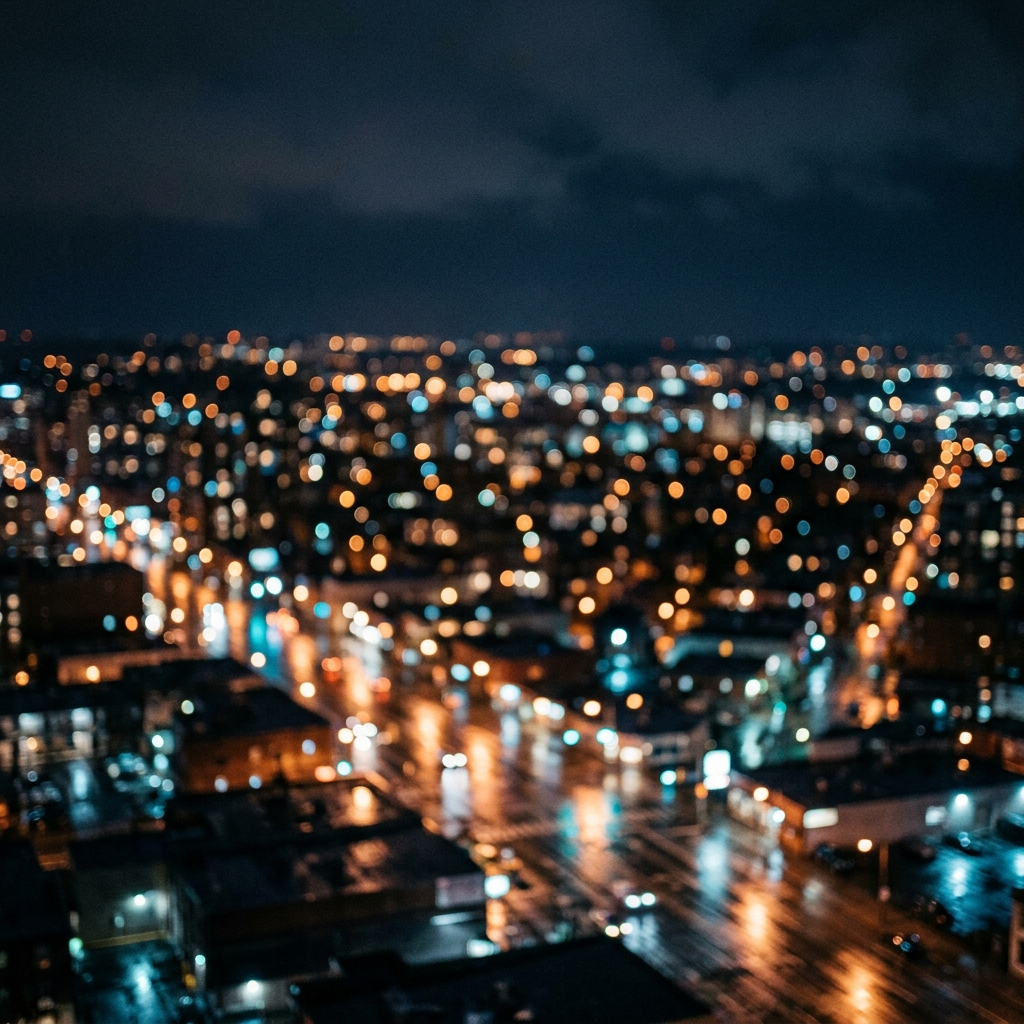
There is a specific quality of attention that appears after midnight. I don’t know if it’s neurological, environmental, or some combination of both. But I know it’s real, because I’ve been chasing it for ten years.
Between midnight and 2am, the world quiets. Not fully — the city doesn’t fully quiet, and neither does the mind. But the surface noise drops. The emails stop arriving. The notifications thin out. The day’s decisions, made and unmade, recede. What’s left is a kind of stripped attention: fewer things competing for it, more available to direct.
For me, this is when certain types of creative work become possible.
What Changes at Night
The quality that I notice most is a reduced self-censorship. During the day, I’m aware of the work in context — aware of how it might be received, what the deadline is, whether this is the right direction. This awareness is useful. It keeps me practical and calibrated.
But it also slows the generative phase. Ideas get evaluated before they fully form. The inner editor is too quick. The practical mind interrupts the imaginative one.
At night, the practical mind is tired. It stops making objections. Ideas surface that wouldn’t have survived the daytime internal critique long enough to be useful. Some of those ideas are genuinely bad — the night removes one filter. But some are things I wouldn’t have found otherwise.
The Particular Texture of Night Work
There is also something about the physical experience of working at night that I find irreplaceable. The desk lamp in the dark room. The city visible through the window as a pattern of lights rather than a surface of detail. The particular silence that is not quite silence.
I have done a lot of design work looking out at a city at night. The bokeh of the streetlights. The movement of cars that are far enough away to be abstract. There is a way in which this visual input is perfectly calibrated for creative work: present enough to ground you, abstracted enough not to compete.
I think this is related to why so many writers have written in cafés, or to music — some ambient noise and visual motion that activates the senses without directing the attention. The city at night is the best version of this I’ve found.
A Note on Sustainability
I’m aware that none of this scales. Midnight sessions as a creative practice work when you’re single, childless, freelance. They work less well with a job that starts at nine. They stop working at all if they become a compensation for insufficient daytime focus rather than a supplement to it.
I’ve had periods where I worked exclusively late because I couldn’t concentrate during the day. That’s not what I’m describing here — that’s avoidance, and it’s exhausting.
What I’m describing is selective. A few nights a month when the work calls for a different kind of attention. When something needs to be made that won’t survive the day. When the stripped attention of 1am is the right tool for the problem.
The Work That Emerges
The things I’m most satisfied with — certain pieces of writing, a few design directions that changed the whole project — have almost all happened at night. Not all of them. But enough to make me take the association seriously.
I’m not sure what the mechanism is. I may never know. What I know is that I’ve stopped feeling guilty about it, and started treating it as a feature rather than a bug.
The city lights don’t explain it. But they’re always there when it happens.